Looking good makes us feel good, and that is exactly the goal of aesthetic medicine.

Is aesthetic medicine something that concerns me?
Looking good makes us feel good, and that is exactly the goal of aesthetic medicine. Although the idea of blending aesthetics with healthcare may seem innovative, in reality this has been happening for centuries. What has truly changed is that, over the years, treatments have become far more specialized, scientifically documented, effective, affordable, and less invasive. Thus, with a quick visit to a specialist, we can leave feeling refreshed and renewed, with zero to minimal recovery time. In today’s fast-paced world, this has become a necessity.
What is aesthetic medicine?
Aesthetic medicine includes any type of procedure or treatment used to improve appearance. It may involve, among other things, eliminating wrinkles, restoring volume and symmetry to the face and body, improving skin quality, and reversing signs of aging.
What differentiates aesthetic medicine from its close relative, aesthetic plastic surgery, is that it is mainly based on non-invasive or minimally invasive solutions. Obviously, no anesthesia is required beyond some topical application, and no surgery is needed, allowing procedures to be comfortably performed in a properly equipped medical office. Does this mean the end of invasive solutions? The answer is no. This is because where the limits of aesthetic medicine are reached, the need for surgical procedures begins. On the contrary, nowadays it is routine for a cosmetic surgery procedure to be accompanied by a maintenance and enhancement program using non-invasive treatments.
Understanding the basics
Among the most popular aesthetic medicine treatments are the elimination of dynamic wrinkles with botulinum toxin and injectable volume enhancement of facial areas, primarily using hyaluronic acid. Both treatments are supported by over two decades of clinical experience, countless studies and publications, and a very low risk profile. Millions of such procedures are performed, and perhaps the main risk lies in their relative ease of application and the resulting commercial exploitation by unqualified individuals with inadequate training and lack of proper medical infrastructure. Simplifying procedures does not mean eliminating the safety rules and safeguards required for any medical act.
Another major area, mainly concerning women, involves non-invasive treatments that aim to replace corresponding surgical procedures. Typical examples include facial and neck lifting, reshaping the nose, restoring a tired and aged look around the eyes, and addressing skin laxity in the arms and abdomen.

Can I avoid surgery?
A significant number of cases can now be treated with non-invasive methods. However, this does not eliminate the need for surgical intervention in many other cases. Aesthetic medicine successfully addresses issues such as:
• Improving skin quality (scar restoration, deep hydration, elimination of skin lesions, increased elasticity and volume, reduction of dark circles).
• Eliminating or reducing wrinkles.
• Correcting and restoring facial volume and shape (liquid lifting).
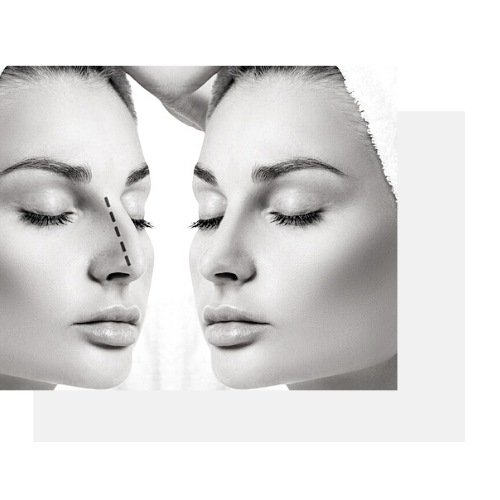
• Correcting nasal imperfections (non-surgical rhinoplasty).
• Early or mild skin laxity (non-invasive face and neck lifting, non-surgical blepharoplasty).
• Permanent treatment of unwanted hair.
In which cases is aesthetic medicine insufficient?
There are several conditions where non-invasive techniques have little to no effectiveness:
• Severe skin laxity and visible excess skin (requiring face/neck lifting, blepharoplasty, abdominoplasty, brachioplasty), as well as correction after bariatric surgery.
• Laxity and atrophy of soft tissues requiring surgical correction and restoration.
• Significant volume loss requiring autologous tissue transfer or implants (fat grafting, breast implants).
• The need to correct bone or cartilage structure to achieve the desired result (rhinoplasty).
In all the above cases, as well as in many others, the cost-effectiveness (value for money) tends to favor surgical solutions.
How necessary is aesthetic medicine for me?
A short answer—although it may sound excessive—is: about as necessary as hair coloring is for women today. It may sound strange, but consider how society viewed such a simple matter years ago compared to now.
Advances in science, and consequently in medicine, have increased life expectancy and extended the age at which people actively participate in society. Resistance to the wear that time inevitably brings to the body drives growing interest in anti-aging, prevention, restoration, and even turning back time. At the same time, adapting to modern trends and standards can be both demanding and necessary, especially for younger individuals. Achieving health and longevity is an obvious goal, but maintaining a youthful appearance has become equally important for many in the developed world. Image, now the number one form of communication, creates the need to appear different from what our biological age suggests.
Aesthetic medicine is a powerful and accessible tool that, with technological advances, allows us to improve quality of life, enhance self-confidence in a healthy way, and ultimately strengthen our psychological resilience against the challenges and increasing demands of everyday life. It should be used with thoughtfulness, respect, and moderation
Book a Consultation
It’s easy and free!