
MOLES – NEVI
What are the most appropriate treatments for mole (nevus) removal?
The choice of treatment for mole (nevus) removal depends on their type and nature (benign or suspicious). The main methods are:
- Laser removal: Indicated only for benign and superficial lesions (e.g. dermal nevi, papillomas), mainly for aesthetic purposes.
- Superficial excision or shaving: Suitable for benign, protruding lesions that do not extend deeply into the skin.
- Cryotherapy: Used for certain benign lesions.
- Surgical excision
When and how is mole removal with Laser performed?
Laser removal is indicated only for benign and superficial skin damages, primarily for aesthetic purposes. It is performed under local anesthesia and is a modern, quick technique using laser beams. It is contraindicated for pigmented or suspicious lesions, as incomplete removal and destruction of tissue required for biopsy are unacceptable.
What are the advantages of Laser mole removal?
The main advantages of laser removal are:
- High precision with no scarring or minimal color variation, leading to excellent aesthetic results
- No pain during or after the procedure (with local anesthesia)
- Fast procedure with no need for stitches
- Immediate return to daily activities (usually the next day)
What is superficial excision (shaving) and when is it applied?
Superficial excision or as it’s commonly known, shaving, is a technique in which the lesion is removed at the skin surface using a blade. It is ideal for benign, raised nevi and is performed under local anesthesia. It is contraindicated for suspicious nevi due to the risk of recurrence.
What are the advantages of shaving removal?
Advantages of nevi removal using the Shaving technique are:
- Painless (with local anesthesia)
- No scarring
- Permanent results in benign, raised lesions
What is nevi – mole removal using cryotherapy and when is it indicated?
Cryotherapy is a method of nevi removal using liquid nitrogen to freeze and destroy tissue through freeze–thaw cycles. It is mainly used for benign lesions (e.g. papillomas, warts) and certain precancerous conditions. It is not the standard method for melanocytic nevi.
When and how is surgical mole removal performed?
Mole removal is performed painlessly under local anesthesia, while in cases of suspected malignancy, complete surgical excision and histopathological examination are always required. Most melanocytic nevi are benign and remain stable throughout life. However, atypical (dysplastic) nevi may develop into malignant melanoma and those require our close monitoring, without overlooking the category of less aggressive cutaneous neoplasms, such as basal cell carcinoma and squamous cell carcinoma. In all cases, early diagnosis and removal prevent progression or metastasis and constitute definitive treatment.
What are the advantages of surgical removal?
The advantages of surgical removal include:
- Safe and definitive removal
- Enables histopathological examination and confirmation of diagnosis
What are moles (nevi)?
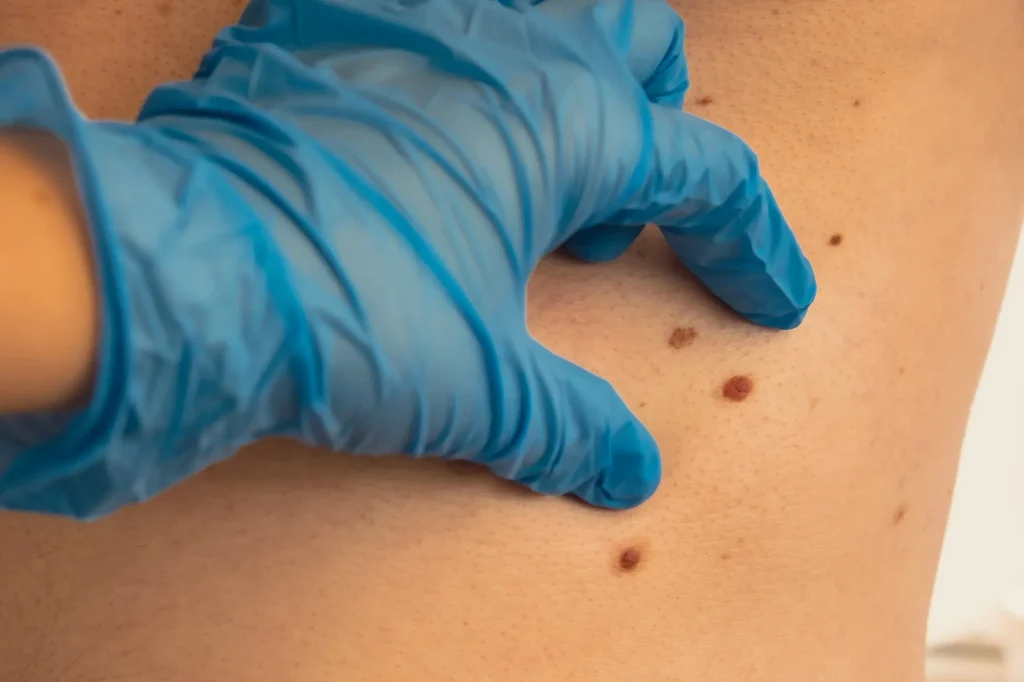
Moles (nevi) are skin lesions resulting from the accumulation of cells, mainly melanocytes, at various levels of the skin. They are extremely common and a normal feature in most individuals.
How many moles does a person typically have?
Almost everyone has moles. Most adults have between 10 and 40 moles. A higher number is also considered normal, especially in fair-skinned individuals. The number of nevi—particularly atypical ones—is an indicator of melanoma risk.
How necessary is mole removal?
Need for removal is primarily indicated for lesions of oncological concern, meaning lesions that are malignant or have the possibility to become such. In such cases, surgical excision followed by histopathological examination is required. Early diagnosis and removal prevent the risk of progression and constitute definitive treatment.
Another major category of removal concerns benign nevi that cause aesthetic or functional problems (e.g. due to their location). In such cases, removal is performed using the most technically refined approach, often employing plastic surgery techniques or specialized laser systems, in order to minimize or eliminate any residual scarring. Mole removal is nowadays performed painlessly under local anesthesia.
What are the main reasons for mole removal?
-
- Oncological: malignant or potentially malignant lesions (e.g. melanoma, basal cell carcinoma, squamous cell carcinoma)
- Aesthetic: significant cosmetic concern
- Functional: irritation due to location
- Clinical history: rapid changes or personal/family history of melanoma
Mole removal does not pose any risk; on the contrary, timely and properly performed surgical excision constitutes the only safe and effective means of both prevention and definitive treatment of cutaneous neoplasms.
How are moles classified?
Depending on their structure and origin, moles (nevi) are classified into various categories, including melanocytic (congenital or acquired), benign, or malignant, among others. The majorities of nevus is benign and remain stable throughout life. However, regular monitoring is essential for the early detection of any changes. More specifically, the 10 most important categories of moles (nevi) are as follows::
- Congenital melanocytic nevi
- Acquired melanocytic nevi
- Atypical (dysplastic) nevi
- Epidermal nevi
- Sebaceous nevi
- Blue nevus
- Halo nevus
- Nevus of Ota and Ito
- Spitz nevus
- Becker nevus
What are congenital melanocytic nevi (moles)?
Congenital melanocytic nevi are moles that are present at birth or appear within the first years of life. They may be small (less than 1.5 cm), medium, or large (greater than 1.5 cm). Regular monitoring is required due to the risk—particularly in larger lesions—of transformation into melanoma.
What are acquired melanocytic nevi (moles)?
Acquired melanocytic nevi are the most common type of moles, appearing during childhood, adolescence, or early adulthood. They consist of clusters of melanocytes in the skin and are usually smaller than 1.5 cm. Sun exposure and genetic predisposition are key factors in their development.
What are atypical or dysplastic nevi (moles)?
Atypical or dysplastic nevi are a category of melanocytic nevi that exhibit certain atypical features (e.g., irregular shape or color) and are considered to have an increased risk of developing into malignant melanoma compared to common nevi. These lesions require particular attention and regular follow-up.
What are sebaceous nevi (Jadassohn nevi)?
Sebaceous nevi (of Jadassohn) are rare, congenital moles. They typically appear on the scalp as hairless plaques with a yellow-orange color. They consist of sebaceous glands, and diagnosis is usually made based on their characteristic appearance, which can be confirmed by biopsy.
What is a blue nevus?
A blue nevus is a melanocytic lesion characterized by the proliferation of melanocytes within the dermis (the deeper layer of the skin). It appears blue or dark in color due to its depth. It is usually acquired and most commonly found on the skin of the head and extremities.
What is a halo nevus (Sutton’s nevus)?
A halo nevus (Sutton’s nevus) is a benign mole characterized by a central dark lesion surrounded by an area of depigmented (white) skin. It is considered entirely benign and may sometimes regress spontaneously. There may be an association with the immune system and vitiligo.
What are nevus of Ota and nevus of Ito?
Nevus of Ota and nevus of Ito are extensive, darkly pigmented patches with a bluish hue, in which melanocytes are located in the upper dermis. Nevus of Ota appears in the distribution of the first two branches of the trigeminal nerve (face/eyes), while nevus of Ito is found on the shoulder and chest. They are more common in Asian populations and only very rarely undergo malignant transformation.
What is a Spitz nevus?
A Spitz nevus is a distinct type of mole that is often red, pink, or light brown in color. It shows significant histological variability and may resemble melanoma (atypical Spitz nevus). For this reason, evaluation with biopsy and histopathological examination is required to differentiate it from malignancy.
What is Becker’s nevus?
Becker’s nevus is a mole that appears during childhood and can occur on any part of the body, with a diameter ranging from a few centimeters to several centimeters. It is usually light brown in color and may be associated with increased hair growth (hypertrichosis). Laser treatment may improve its appearance, although recurrence is possible.
What is the ABCDE rule for evaluating moles?
The ABCDE rule is a tool used to assess moles and identify potential features of dysplasia or malignancy (melanoma). The five criteria are:
- Asymmetry: One half of the mole does not match the other.
- Border: The borders are irregular, scalloped, or poorly defined.
- Color: The mole has multiple colors or changes color over time.
- Diameter: The mole is larger than ___ millimeters (approximately the size of a pencil eraser).
- Evolving: Any change in size, shape, color, or symptoms (e.g., bleeding, pain, itching) over time.
What are the causes of the appearance of moles?
The development of moles is influenced by several factors. The main causes include:
- Genetic predisposition.
- The age of the individual.
- Total cumulative sun exposure and a history of severe sunburns.
- Specific skin type (e.g., fair skin types).
FREQUENTLY ASKED QUESTIONS

EXPERTISE & CARE
TRUST US WITH YOUR TREATMENT
Dr. Konstantinos Floros was born in Athens, studied Medicine at the University of Thessaloniki, and specialized in Plastic Surgery in the United Kingdom. He has participated in specialized aesthetic surgery seminars in London and New York. In Greece, he practices privately with a focus on aesthetic plastic surgery and modern applications of cosmetic medicine and anti-aging. He has served as a Plastic Surgery registrar at the university hospitals Queen Mary’s University Hospital in London and Addenbrooke’s Hospital in Cambridge.







CUSTOMER REVIEWS
Το Trustindex επαληθεύει ότι η αρχική πηγή της κριτικής είναι Google. Το αποτέλεσμα ξεπέρασε και τα πιο τρελά μου όνειρα εξαιρετικόςΔημοσιεύτηκε στο GoogleΤο Trustindex επαληθεύει ότι η αρχική πηγή της κριτικής είναι Google. Ο καλύτερος πλαστικός Χειρουργος !!!! Και πάνω από όλα εξαιρετικός άνθρωπος πρόσφατα έκανα ένα V lift τέλειο φυσικό αποτέλεσμα με τοπική αναισθησία ,ο χώρος υπέροχος!!! ,οι κοπελιές μέσα πολύ ευγενικές και ευχάριστες 🥰Δημοσιεύτηκε στο GoogleΤο Trustindex επαληθεύει ότι η αρχική πηγή της κριτικής είναι Google. Εξαιρετικος!Δημοσιεύτηκε στο GoogleΤο Trustindex επαληθεύει ότι η αρχική πηγή της κριτικής είναι Google. Ένας εξαιρετικός γιατρός που κέρδισε την εμπιστοσύνη μου από την αρχή!Δημοσιεύτηκε στο GoogleΤο Trustindex επαληθεύει ότι η αρχική πηγή της κριτικής είναι Google. Dr. Konstantinos Floros... the best ever!!! He is a highly qualified plastic surgeon... ❤️Δημοσιεύτηκε στο GoogleΤο Trustindex επαληθεύει ότι η αρχική πηγή της κριτικής είναι Google. Εξαιρετικός γιατρός!!!Δημοσιεύτηκε στο GoogleΤο Trustindex επαληθεύει ότι η αρχική πηγή της κριτικής είναι Google. Εξαιρετικός γιατρός με εμπειρία! Εμπνέει εμπιστοσύνη. Ευχάριστο περιβάλλον και προσωπικό . Τον συστήνω ανεπιφύλακτα.
COME TO THE SPECIALISTS
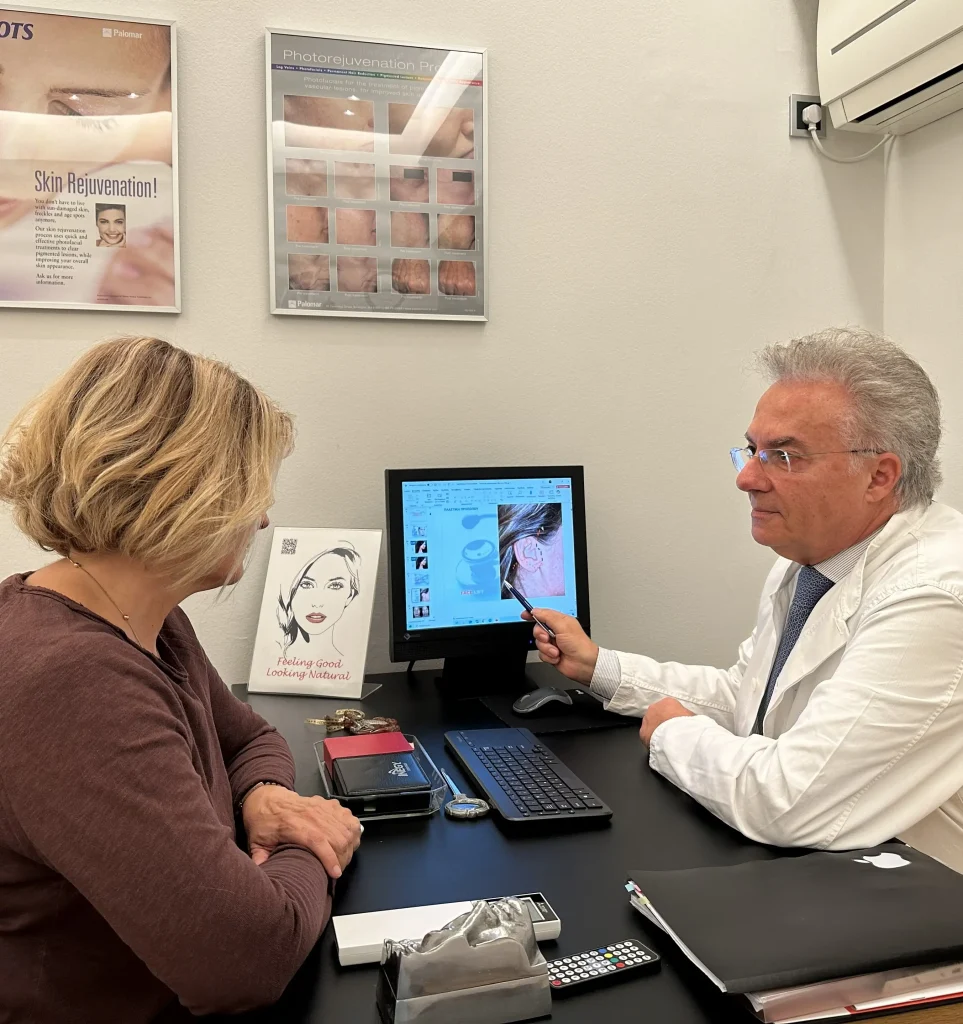
If you have any questions, concerns or would like to make an appointment with Dr. Konstantinos Floros, please contact us.