
GYNECOMASTIA
What is Gynecomastia?
Gynecomastia, or male breast enlargement, is a common condition that significantly affects men’s appearance and self-confidence. Essentially, it refers to the presence of increased breast volume in men, causing the chest to take on a more feminine appearance. It is estimated that approximately 50% of men experience gynecomastia, either in a mild or more advanced form.
How many types of Gynecomastia are there?
Gynecomastia is divided into 2 main types, which may coexist:
• True Gynecomastia (Glandular type): Caused by excessive development of breast gland tissue. It is often due to hormonal imbalance (excess estrogen production), use of anabolic substances, certain medications, or specific medical conditions. True gynecomastia can appear in newborns, adolescents, or elderly men.
• Pseudo-gynecomastia (Lipomastia): Caused by excessive fat deposition in the chest area. It is mainly associated with significant weight gain.
How is Gynecomastia diagnosed?
To determine the type of gynecomastia and the best treatment, a reliable evaluation is required:
• Palpation: If a firm tissue mass is felt beneath the areola, distinct from the surrounding fatty tissue, it is most likely true gynecomastia.
• Ultrasound: The most reliable examination for determining the type.
• Preoperative evaluation: Based on clinical examination and laboratory findings, an individualized surgical plan is created
What are the benefits of surgical treatment of Gynecomastia?
Surgery for gynecomastia provides a definitive solution and significant benefits:
• Masculine chest appearance: Flat, firm chest in harmony with body type.
• Improved self-confidence: Enhances masculinity and psychology, improving social and clothing choices.
• Permanent solution: Results are long-lasting and permanent.
• Advanced techniques: Use of modern liposuction and mastectomy techniques.
• Minimal visible scarring: Incisions are very small and hidden in strategic areas (e.g. areolar border or armpit).
What is the appropriate treatment for True Gynecomastia?
In cases of true gynecomastia (enlargement of glandular tissue), treatment involves complete removal of the gland (subcutaneous mastectomy):
• Procedure: The gland is removed through a small semicircular incision at the edge of the areola.
• Reshaping: After removal, the surgeon sculpts the tissues to reduce volume and achieve the desired masculine chest contour.
• Excess skin: If significant skin laxity is present (usually in advanced cases), a circular incision around the areola may be performed to remove and tighten the skin.
What method is used for Pseudo-gynecomastia?
Since pseudo-gynecomastia is caused by fat accumulation in the chest, the treatment of choice is liposuction:
• Modern techniques: Advanced methods are used for targeted removal of excess fat.
• Anesthesia: These are minimally invasive procedures that can be performed under local anesthesia.
How long does the surgery take and what type of anesthesia is used?
• Duration: The procedure takes approximately 1.5 hours.
• Anesthesia: It can be performed under local or general anesthesia, depending on case complexity and gynecomastia type.
• Hospital stay: Usually, no overnight stay is required.
What should I know about recovery after Gynecomastia surgery?
Recovery is relatively quick and not particularly painful:
• Return to work: Patients can return to light activities and office work after 3–4 days. In liposuction cases, return may be as early as the next day.
• Exercise: Gradual return to physical activity is recommended after 1 week (liposuction) or about 20 days (subcutaneous mastectomy).
• Possible symptoms: Bruising and swelling may occur but gradually subside.
• Final result: Improvement is visible immediately, but the final result is established after about 3 months.
Who is an ideal candidate for gynecomastia correction?
If gynecomastia does not resolve on its own (as may happen during adolescence) and you are an adult in good physical condition, you are an ideal candidate, especially if you:
• Experience chronic back, neck, or shoulder pain due to chest weight.
• Have skin irritation (dermatitis) under the chest area.
• Feel reduced self-confidence or limit sports/social activities.
BEFORE & AFTER
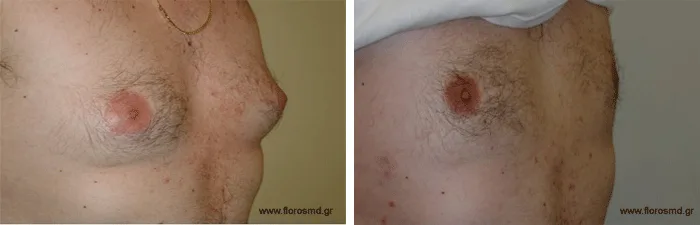
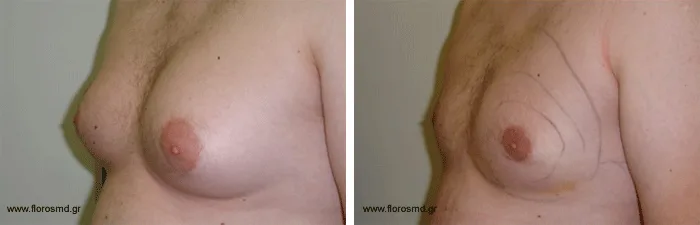
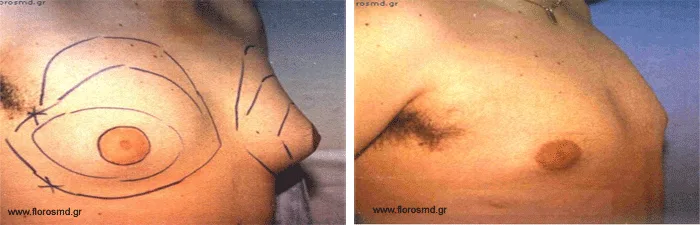
FREQUENTLY ASKED QUESTIONS

EXPERTISE & CARE
TRUST US WITH YOUR TREATMENT
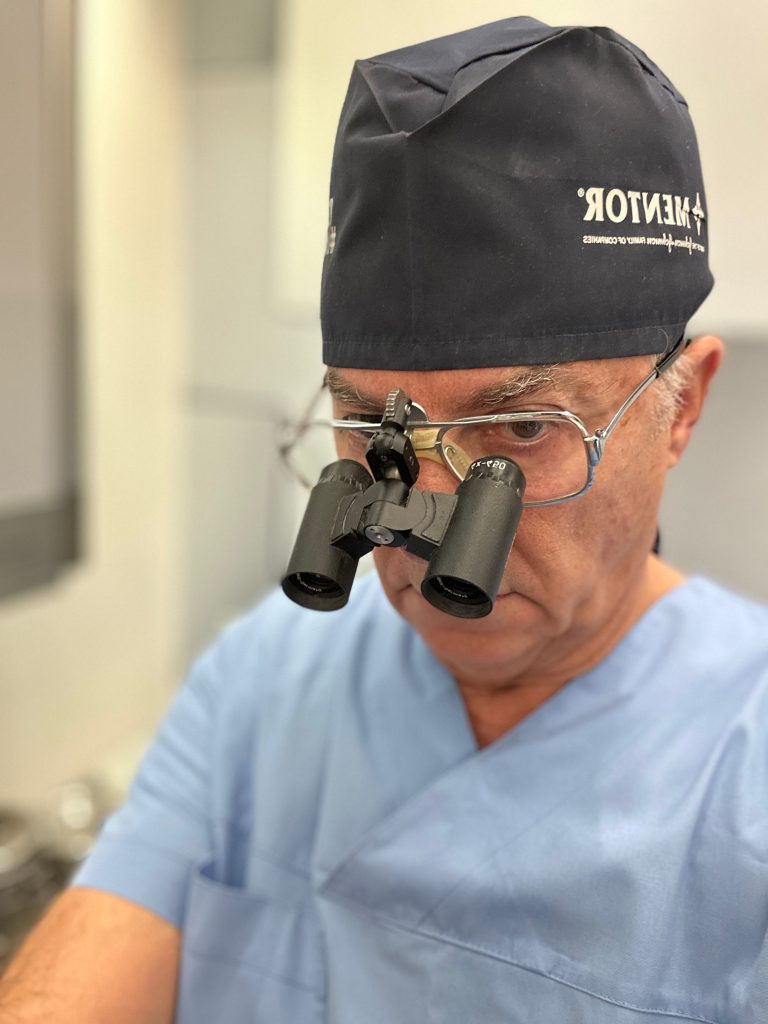
Dr. Konstantinos Floros was born in Athens, studied Medicine at the University of Thessaloniki, and specialized in Plastic Surgery in the United Kingdom. He has participated in specialized aesthetic surgery seminars in London and New York. In Greece, he practices privately with a focus on aesthetic plastic surgery and modern applications of cosmetic medicine and anti-aging. He has served as a Plastic Surgery registrar at the university hospitals Queen Mary’s University Hospital in London and Addenbrooke’s Hospital in Cambridge.






CUSTOMER REVIEWS
Το Trustindex επαληθεύει ότι η αρχική πηγή της κριτικής είναι Google. Το αποτέλεσμα ξεπέρασε και τα πιο τρελά μου όνειρα εξαιρετικόςΔημοσιεύτηκε στο GoogleΤο Trustindex επαληθεύει ότι η αρχική πηγή της κριτικής είναι Google. Ο καλύτερος πλαστικός Χειρουργος !!!! Και πάνω από όλα εξαιρετικός άνθρωπος πρόσφατα έκανα ένα V lift τέλειο φυσικό αποτέλεσμα με τοπική αναισθησία ,ο χώρος υπέροχος!!! ,οι κοπελιές μέσα πολύ ευγενικές και ευχάριστες 🥰Δημοσιεύτηκε στο GoogleΤο Trustindex επαληθεύει ότι η αρχική πηγή της κριτικής είναι Google. Εξαιρετικος!Δημοσιεύτηκε στο GoogleΤο Trustindex επαληθεύει ότι η αρχική πηγή της κριτικής είναι Google. Ένας εξαιρετικός γιατρός που κέρδισε την εμπιστοσύνη μου από την αρχή!Δημοσιεύτηκε στο GoogleΤο Trustindex επαληθεύει ότι η αρχική πηγή της κριτικής είναι Google. Dr. Konstantinos Floros... the best ever!!! He is a highly qualified plastic surgeon... ❤️Δημοσιεύτηκε στο GoogleΤο Trustindex επαληθεύει ότι η αρχική πηγή της κριτικής είναι Google. Εξαιρετικός γιατρός!!!Δημοσιεύτηκε στο GoogleΤο Trustindex επαληθεύει ότι η αρχική πηγή της κριτικής είναι Google. Εξαιρετικός γιατρός με εμπειρία! Εμπνέει εμπιστοσύνη. Ευχάριστο περιβάλλον και προσωπικό . Τον συστήνω ανεπιφύλακτα.
COME TO THE SPECIALISTS
If you have any questions, concerns or would like to make an appointment with Dr. Konstantinos Floros, please contact us.